.png)

.webp)
NASA JAMES WEBB TELESCOPE TRANSPORT
Project location: Guiana Space Center, Kourou, French Guiana
Project Overview
Nordholm Companies provided heavy transport planning, construction management, and field supervision services for the movement of the James Webb Space Telescope at the Port of Seal Beach, California. The telescope was carefully positioned and prepared for international transport to French Guiana, where it would ultimately be launched into space as one of NASA's most ambitious scientific missions.

The LogistiCs Challenge
The James Webb Space Telescope represented a one-of-a-kind, high-value aerospace asset requiring precise handling, strict safety controls, and flawless execution. The move demanded careful coordination between engineering, transport, logistics, and project management teams while maintaining complete protection of sensitive flight hardware.
the engineered SOLUTION
Nordholm's Heavy Construction Services team provided on-site construction management and transport support throughout the operation. Through detailed planning, experienced field supervision, and proven heavy haul methodologies, the team helped ensure the telescope's safe movement through the port and successful preparation for overseas shipment to French Guiana.
EQUIPMENT USED

Hydraulic Multi-Axle Trailer System
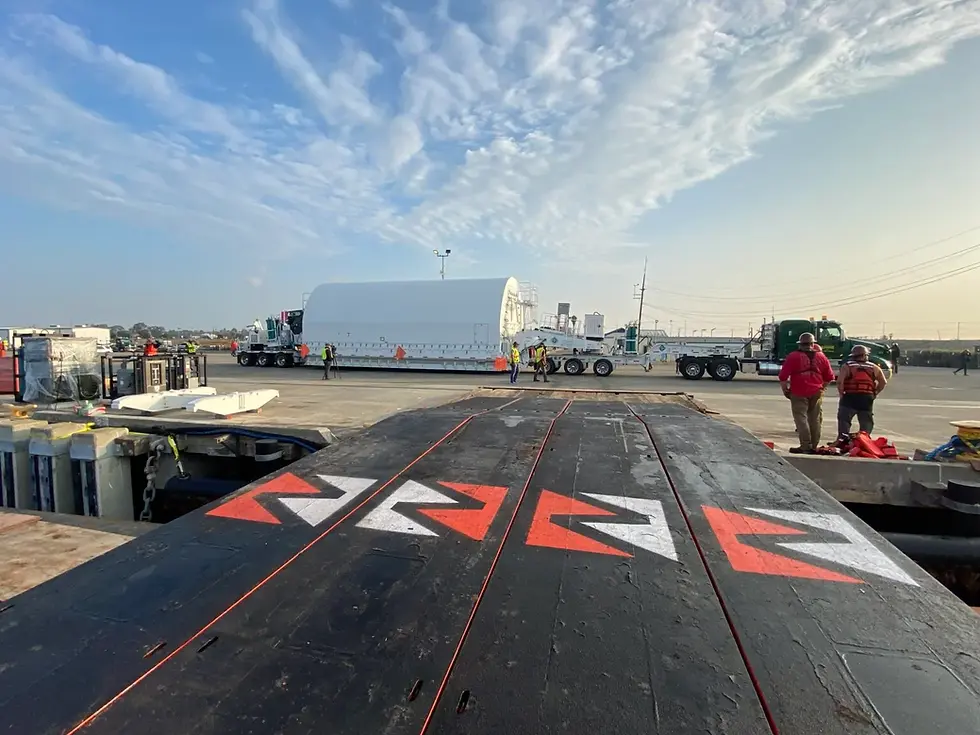
A specialized self-steering hydraulic trailer system used to transport the James Webb Space Telescope shipping container from the aerospace facility to Seal Beach. The trailer provided precise maneuverability, adjustable ride height, and controlled movement to protect one of the world's most sensitive scientific payloads during transport.

Floating Bridge Transfer System
A custom-engineered floating bridge system connected the dock to the cargo vessel, creating a stable transition path for the telescope transport unit. The system minimized vibration and maintained alignment during the loadout operation, ensuring safe transfer from shore to ship.

Spud Barge Stabilization Platform
An engineered spud barge provided a stable transfer platform during vessel loading operations. The barge was anchored to the seabed and designed to compensate for tidal movement, vessel motion, and environmental conditions while supporting the telescope's transfer to the ro-ro vessel.